First Asian
World Forum for Motor Museums Conference
Highlights Japanese Automotive Culture
and Global Appeal
The “2024 World Forum for Motor Museums” (WFFMM) was jointly held by the Japan Automobile Manufacturers Association (JAMA), which represents Japanese automakers, and the Japan Council of Science Museums, which includes the National Museum of Nature and Science, Tuesday, October 29 to Friday, November 1, 2024 .
The event brought together approximately 200 participants from 17 countries. The inaugural conference was held in the UK in 1989 at Beaulieu, with subsequent gatherings hosted biennially across Europe and North America. This year marked a milestone as the 17th conference was held in Asia, specifically in Japan for the first time. Hosted by Japanese automobile museums under an “All Japan” framework, it offered a valuable opportunity to showcase the unique appeal of Japanese cars and automotive culture while building connections with museum professionals from around the world.
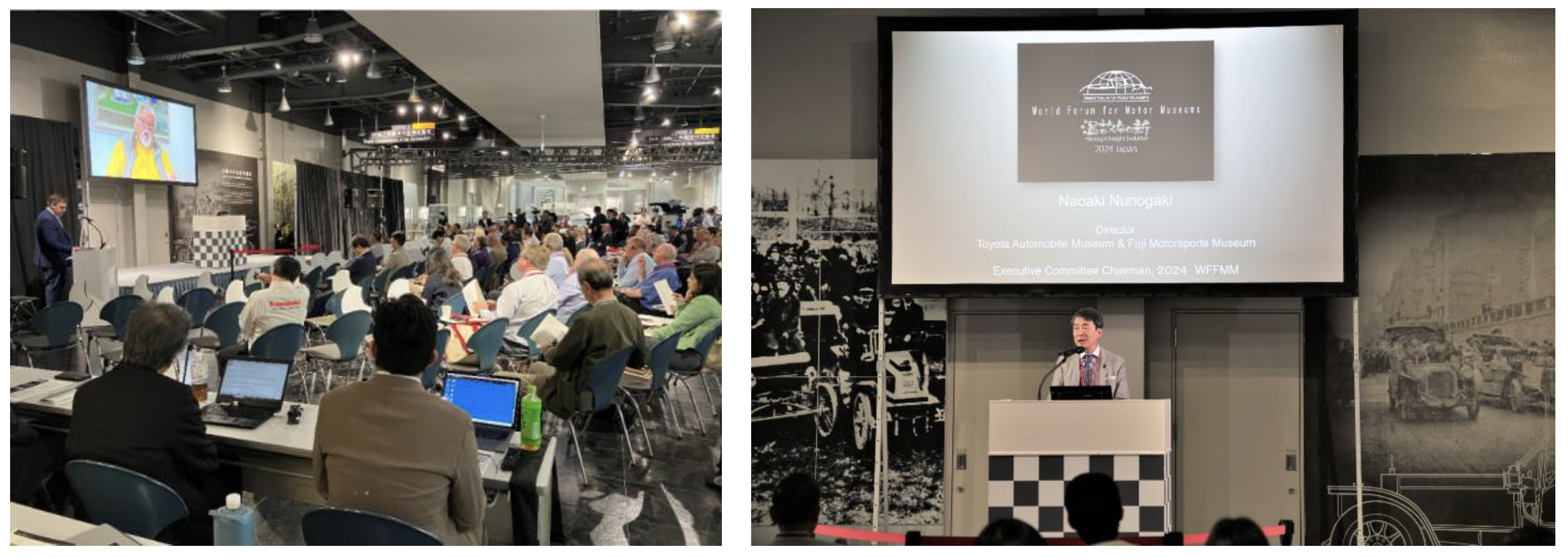
The Toyota Automobile Museum in Nagakute, Aichi Prefecture, served as the venue for discussions on October 30 and 31, featuring eight sessions under the theme Hindsight Insight Evolution. This theme focused on learning from the past (Hindsight), deepening understanding (Insight), and looking ahead to the future (Evolution).
At the opening, Michael Penn, Chairman Emeritus of the World Forum for Motor Museums Secretariat, emphasised the importance of personal interaction, noting that face to face communication is the most effective way for humans to connect and that this conference enables automotive museum leaders to meet in person, share experiences, and forge connections that go beyond words.
Executive Chairman Nunogaki expressed his enthusiasm, noting, “I am delighted that this conference is taking place here in Japan, providing us with the opportunity to discuss and enhance the cultural significance of automobiles in our country.”
Program Overview
|
Program |
Content Outline |
|
#1 |
Why the Automotive Industry Thrived in Japan |
|
#2 |
The Popularity of Japanese Classic Cars Overseas |
|
#3 |
Examples of Digital Utilization and Balancing with Real Experiences |
|
#4 |
Challenges and Innovations in Museum Management |
|
#5 |
Heritage Activities of Japanese Automakers |
|
#6 |
The Background of How Cars Became a Cultural Phenomenon |
|
#7 |
The Formation of Automotive Culture in Asia and the Role of Automobile Museums |
|
#8 |
Reflections on the Major Transformations 100 Years Ago and a Message for the Future |
Session #1
Kenichi Furuhashi and Takahiro Fujimoto from the Japan Automotive Hall of Fame discussed Japan’s unique approach to manufacturing, comparing it with other countries and explaining the how the evolution of past production and innovation mirrors that of battery electric vehicles and software defined vehicles.
Session #2
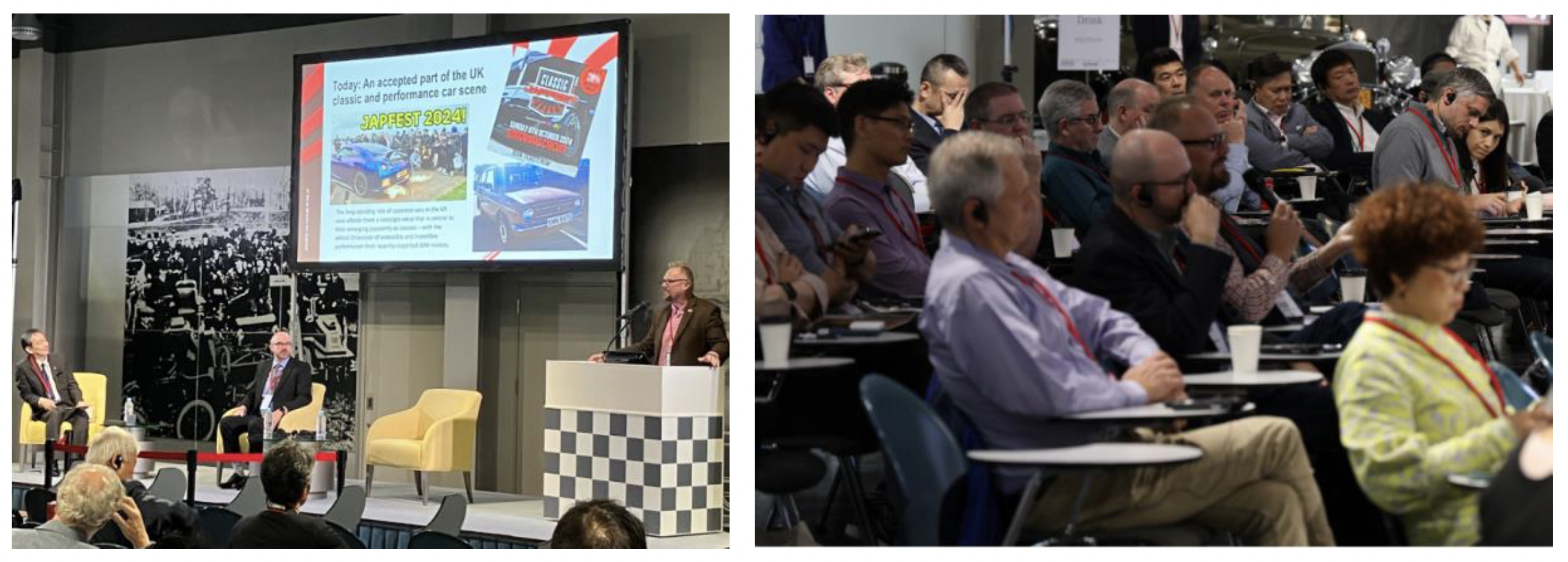
Mamoru Ishii, Derek E. Moore and Jon Murden explored the appeal of Japanese cars from the 1980s and 1990s, emphasizing their influence on pop culture and heritage vehicle trends in the U.S. and UK. The discussion highlighted evolving interpretations within motor museums as Japanese cars gain recognition in classic automotive culture.
Session #3
Yoji Ohtani, Takayuki Aikawa, and Wim Van Roy showcased examples of integrating digital tools, from virtual factory tours to AI-driven museum interactions, to enhance both real and virtual experiences. The presentation highlighted the potential for immersive and educational digital engagement in motor museums.
Session #4
Yusuke Souma, Luca Hoare, and Yoshinori Asahi discussed challenges and innovations in museum management, particularly concerning preserving and displaying heritage vehicles. They examined ethical dilemmas around exhibiting operational vehicles and strategies for transforming visitor engagement.
Session #5
Nobuaki Tanaka, Shunsuke Andou and Yasunari Tanimoto shared insights into their heritage initiatives, such as preservation projects and parts reproduction.
This session highlighted strategies for managing and leveraging heritage assets to engage enthusiasts and preserve brand legacy.
Session #6
Fumihiko Kondo, Leslie Kendall, Sébastien de Baere and Leo Van Hoorick delved into how cars evolved from functional objects to significant cultural artifacts.
The discussion touched on car styling, the role of luxury and art in automotive design, and how cars became collectible and valuable museum pieces.
Session #7
Akira Echizen, Jaja Ishibashi, and Colin Kiel examined the formation of automotive culture across Asia, including vehicles tailored to local conditions and the role of automotive museums in Australasia.
The discussion offered historical and forward-looking perspectives on the cultural significance of cars.
Session #8
Hosted by Agnes Mineno, Stephen Laing and Matt Anderson discussion focused on the history and culture of automobiles in America and Europe, drawing parallels between the current transformations in the automotive industry and the era of steam, electric, and gasoline vehicles from 100 years ago. Participants emphasized that cars transcend mere transportation, embodying significant social, economic, and cultural roles, and prompting a discussion about how to engage younger generations.
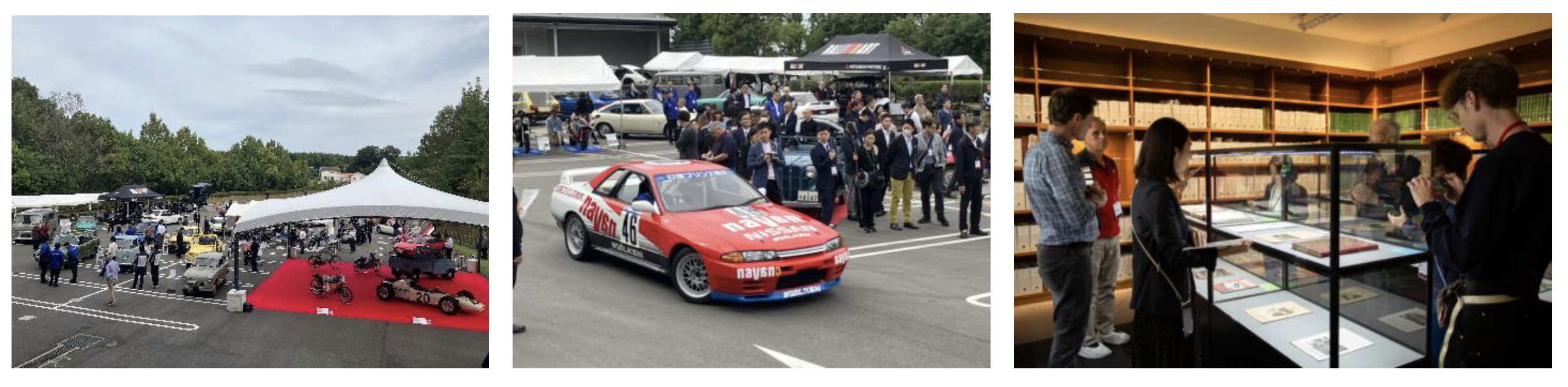
In parallel with the conference, an outdoor exhibition featured a display of 36 vehicles by 12 domestic car manufacturers and 2 motorcycle manufacturers, with some vehicles showcased in demonstration runs. Additionally, special tours of the museum’s library and the rare materials room (which is normally closed to the public) were held, providing insights into the acquisition and preservation methods for archived materials.
On the following day, November 1, participants visited the Fuji Motorsports Forest in Oyama, Shizuoka Prefecture, touring the Fuji Speedway and the Fuji Motorsports Museum before concluding the conference with a farewell party at the Fuji Speedway Hotel.
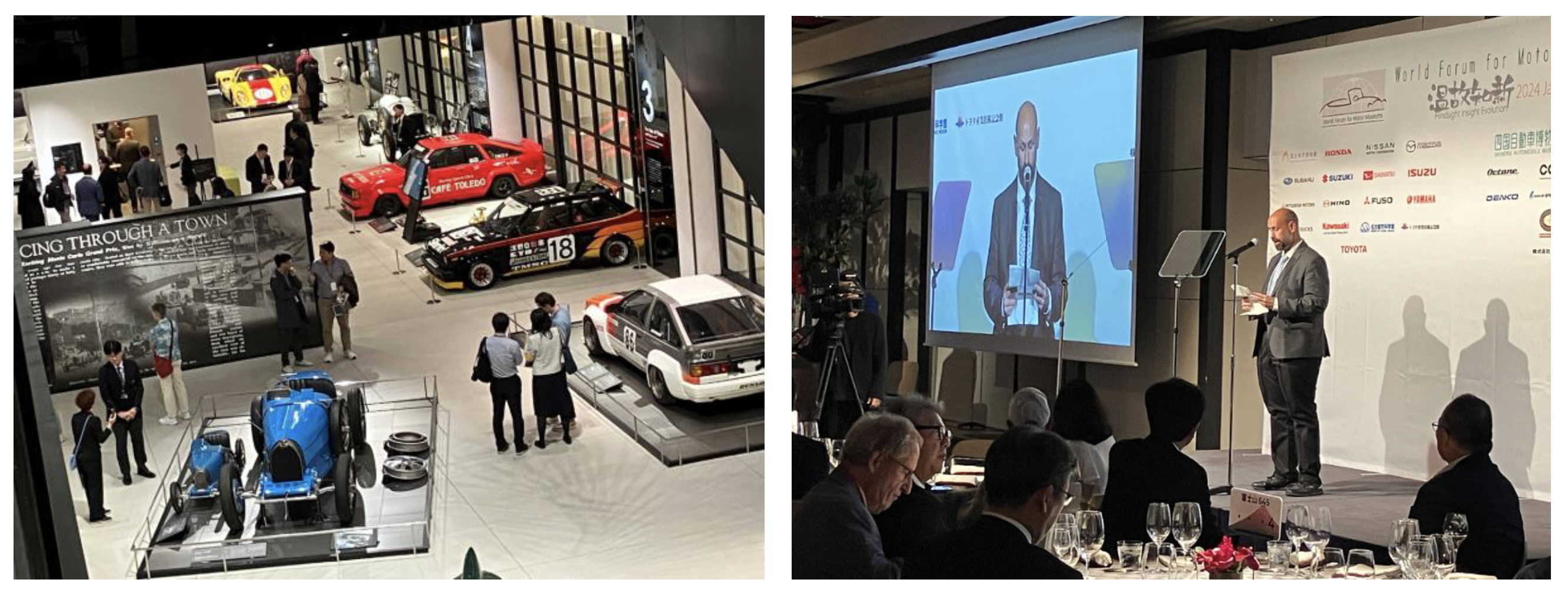
In his closing remarks, newly appointed Chair Wim Van Roy said, “We are a global family united by our love for automotive heritage. I am confident that the connections made here will strengthen our community. Let us continue to inspire each other and advance our shared mission of preserving automotive culture.”
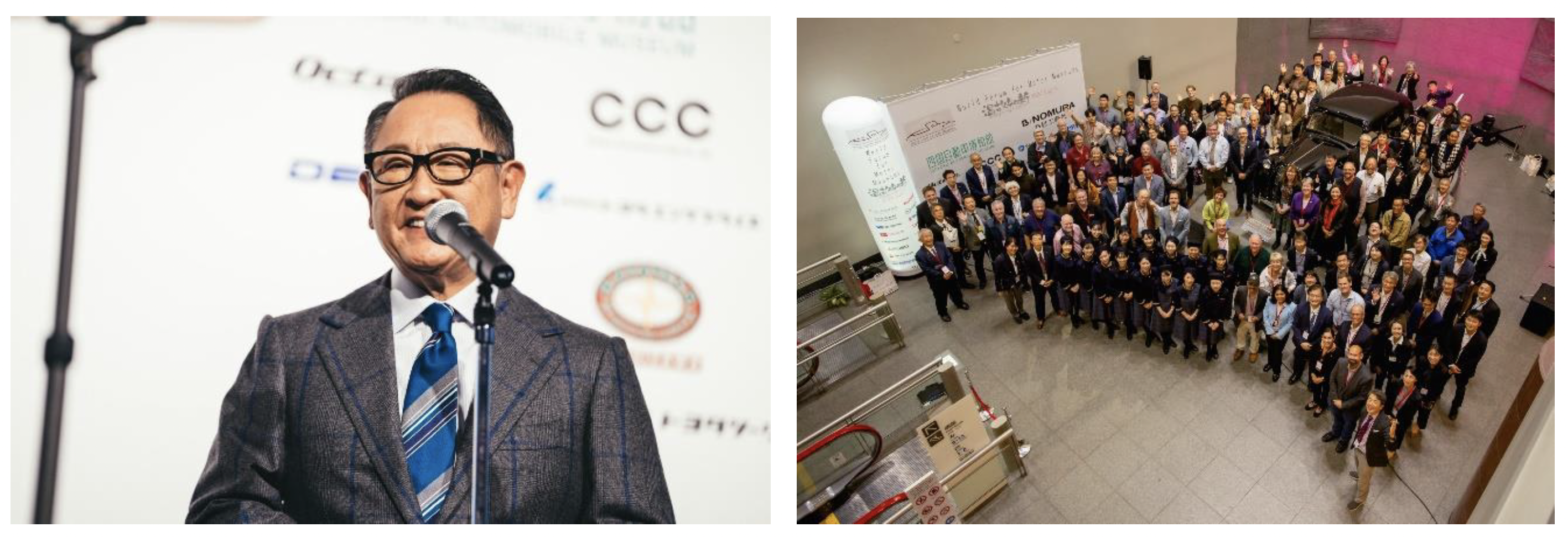
Toyota Motor Corporation Chairman Akio Toyoda also took the stage at the party, saying, “As a car lover, a master driver and the Chairman of Toyota, I feel it’s important to not only preserve the history of automobiles and motorsports for future generations, but to bring it alive today and to make it as exciting and engaging as any sport or art form out there.“
“Historically Asia, has always been in the junior leagues, compared to Europe and the U.S. when it comes to automotive attractions and museums, but we’re slowly, but surely, making headway,”Toyoda added.“I believe our universal love of cars is something that unites people everywhere and for that reason alone, I think they are worthy of celebration.”
Warm regards,
Wim Van Roy
World Forum for Motor Museums